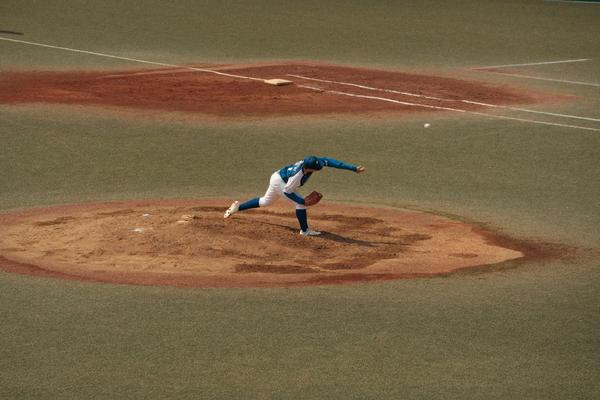
Watching a pitcher work becomes much more interesting once you can recognize what the ball is trying to do. Some pitches arrive with maximum speed, some bend sharply across the plate, and others look like fastballs until they slow down or drop. Each is designed to disrupt timing, change the expected path of the ball, or make solid contact harder.
The main baseball pitch types can be grouped into fastballs, breaking balls, and offspeed pitches. Modern pitchers often carry several variations, but learning the core pitches first makes it easier to understand pitch sequences and why one offering follows another.
Fastballs: Speed, Carry and Movement
Four-Seam Fastball
The four-seam fastball is usually a pitcher’s hardest and straightest offering. Thrown with backspin, it is often used to challenge hitters directly, especially at the top of the strike zone. A good four-seamer may appear to “rise,” but the ball does not literally climb. Strong backspin can make it drop less than a hitter expects, creating the impression of late carry.
That makes the four-seamer a useful reference point for an entire arsenal. If a hitter must prepare for high velocity, slower pitches and pitches with different movement become harder to time.
Sinker or Two-Seam Fastball
A sinker is another fastball, but it typically shows more arm-side run and downward action than a four-seamer. For a right-handed pitcher, the ball may move toward a right-handed hitter and away from a left-handed hitter; a left-hander produces the mirror image.
Sinkers are commonly used lower in the zone because their movement can encourage ground balls. They are usually a little slower than a pitcher’s four-seamer, although the exact difference varies.
Cutter
A cutter, or cut fastball, moves toward the pitcher’s glove side late in its flight. A right-handed pitcher’s cutter therefore tends to move away from a right-handed hitter and in toward a left-handed hitter. It is normally a little slower than a four-seam fastball but harder than most sliders.
The cutter is especially useful for avoiding the barrel. When it moves in on the hands of an opposite-handed hitter, it can produce weak contact or broken bats. A natural related topic to explore is how pitchers change eye level.
Breaking Balls: Spin Changes the Expected Path
Slider
A slider is a hard breaking ball with sharper, later movement than a typical curveball. It is usually thrown faster than a curve and often moves toward the pitcher’s glove side. The traditional slider can also have downward break, creating a pitch that looks fastball-like before darting away from the barrel.
When comparing a fastball vs slider, the difference is not simply velocity. A slider works because its speed and early flight can resemble a fastball while its late movement sends it somewhere else. That makes it a common chase pitch just outside the strike zone.
Curveball
A curveball is generally slower than a slider and produces more overall vertical break. Its spin creates the familiar downward, bending shape. Some curves drop mostly downward, while others combine vertical break with noticeable horizontal movement.
A curveball explained from the hitter’s perspective is straightforward: the ball can leave the hand on an inviting path, then arrive lower than expected. The result may be a swing over the pitch or a badly mistimed attempt.
Sweeper
The sweeper is a slider-family pitch built around large horizontal movement. Compared with a tighter traditional slider, it usually travels farther across the plate and is often thrown slightly slower. It is a useful reminder that types of baseball pitches are movement categories rather than identical formulas; two pitchers can throw sliders that look very different.
Offspeed Pitches: Winning the Timing Battle
Changeup
The changeup is built on deception. A pitcher tries to deliver it with arm action that resembles the fastball, but the ball arrives significantly slower. If the hitter commits based on fastball timing, the swing can be early even when the pitch finishes in the strike zone.
Changeups also often show arm-side fade and extra drop. In changeup baseball strategy, the speed difference from the fastball matters more than one universal velocity. The pitch succeeds when the hitter cannot comfortably distinguish the two early enough.
Splitter
A splitter is an offspeed pitch thrown with the fingers spread wider around the ball. It can resemble a fastball early before dropping sharply near the plate. That late tumble makes it effective below the strike zone, where hitters may start a swing expecting the ball to stay higher.
Why Pitchers Mix Different Pitches
No pitch works in isolation. Pitching is a sequence problem: one pitch changes what the hitter expects from the next. A four-seamer at the top of the zone can make a breaking ball below it more tempting. A sinker moving one way can make a cutter moving the other way harder to square up. A changeup can punish a hitter who has sped up to catch the fastball.
Consider a two-strike situation. A right-handed pitcher faces a right-handed hitter who has just fouled off a four-seam fastball. The hitter is geared for velocity. The pitcher could throw another fastball, but a slider starting on a similar line and breaking away may produce a chase. The value comes from the relationship between the pitches, not merely from the slider itself.
When watching a game, focus on three clues: speed difference, direction of movement, and where the pitch finishes. After a few innings, patterns become easier to spot. Useful related topics include how the strike zone works and pitch sequencing in baseball.
Frequently Asked Questions
What are the main types of baseball pitches?
The main groups are fastballs, breaking balls, and offspeed pitches. Common examples include four-seam fastballs, sinkers, cutters, sliders, curveballs, sweepers, changeups, and splitters. Professional tracking systems recognize additional variations.
What is the difference between a slider and a curveball?
A slider is generally harder with tighter, later break, while a curveball is usually slower with more overall vertical movement. Individual pitchers can produce shapes that blur the line between them.
Why does a changeup fool hitters?
A good changeup is delivered with fastball-like arm speed but reaches the plate more slowly. Hitters who commit to faster timing can swing early, and the pitch may also fade or drop away from the barrel.
Which pitch is the hardest to hit?
There is no single answer. Effectiveness depends on velocity, movement, location, deception, and how a pitch fits with the rest of the arsenal. A modest pitch can become much more effective when another offering changes the hitter’s expectations.
Reading the Pitch, Not Just the Speed
Learning baseball pitch types is really about seeing how pitchers manipulate speed, spin, movement, and expectation. Four-seamers challenge hitters with velocity and carry, sinkers and cutters move fastballs in different directions, sliders and curves change the expected path, and changeups and splitters attack timing. Once you recognize those contrasts, each at-bat becomes a tactical contest rather than a simple throw-and-swing exchange.