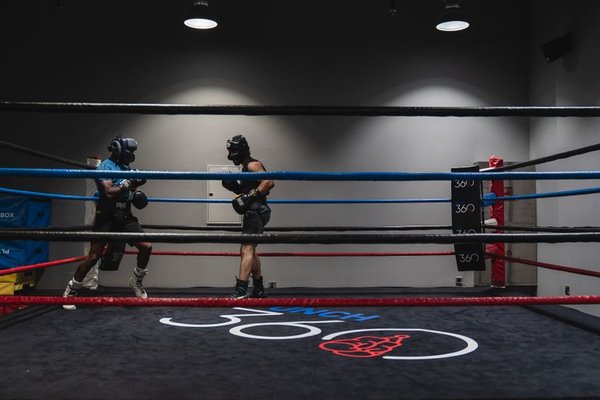
A British title fight might be advertised at super lightweight, welterweight or cruiserweight. Those labels matter: a few pounds can determine which championship a boxer is eligible to contest. British boxing weight classes match opponents of comparable size, but the rules differ between professional and amateur competition.
British championship divisions do not perfectly match every international boxing chart. Here is how to read the limits accurately.
Who decides boxing weight classes in Britain?
The British Boxing Board of Control (BBBofC) regulates much of Britain’s professional boxing and specifies the weights used for British titles. International organisations, including the WBC, WBA, IBF and WBO, have their own championship structures. A division recognised internationally is not automatically available for a British title.
Amateur boxing operates differently. England Boxing, Boxing Scotland and Welsh Boxing oversee their respective domestic activities, while international competitions follow the relevant tournament rules. Amateur categories are normally expressed in kilograms rather than pounds.
British professional championship weight limits
The BBBofC’s published list contains the following 15 British championship divisions. Figures in kilograms are provided for comparison; pounds are the familiar professional reference.
Flyweight to featherweight
Flyweight: 112lb (50.80kg); super flyweight: 115lb (52.16kg); bantamweight: 118lb (53.52kg); super bantamweight: 122lb (55.34kg); featherweight: 126lb (57.15kg). Each figure is the maximum permitted weight for that championship division.
Super featherweight to welterweight
Super featherweight: 130lb (58.97kg); lightweight: 135lb (61.24kg); super lightweight: 140lb (63.50kg); welterweight: 147lb (66.68kg). Super lightweight is also called light welterweight or junior welterweight; these names refer to the same general 140lb class.
Super welterweight to heavyweight
Super welterweight: 154lb (69.85kg); middleweight: 160lb (72.58kg); super middleweight: 168lb (76.20kg); light heavyweight: 175lb (79.38kg); cruiserweight: 200lb (90.72kg); heavyweight: no upper weight limit. Super welterweight is sometimes called light middleweight or junior middleweight.
These boxing weight limits apply to championships, not to a person’s everyday weight. Non-title bouts may involve other agreed weights, subject to approval. The Board’s heavyweight category is open-ended rather than capped at a particular number.
Why international boxing charts sometimes show 17 divisions
Many global professional charts list 17 traditional divisions, beginning at minimumweight (105lb) and light flyweight (108lb). Both exist in international boxing, but neither appears in the BBBofC’s published British championship weight list. This explains why sources give different answers to how many boxing divisions the UK has.
Some international organisations also recognise additional classes, such as bridgerweight. Those arrangements should not be confused with the British championship structure. When reading a fight announcement, check the belt, governing organisation and division rather than relying on a worldwide chart.
The new British light cruiserweight class for 2027
On 15 September 2026, the BBBofC announced a new light cruiserweight championship division starting on 1 January 2027. Its limit will be 187lb, or 13st 5lb, between light heavyweight at 175lb and cruiserweight at 200lb.
The Board says the category will be available for Area, English, Celtic and British titles. The new class splits a 25lb gap between existing divisions. It is a forthcoming change, not a class already active for British championships in October 2026.
What happens at the professional weigh-in?
Making weight means meeting the prescribed limit at the official weigh-in, not necessarily weighing the same amount when the fight begins. Professional weigh-ins often take place before fight day, allowing time for eating and drinking afterwards. Rehydration rules vary, and no single allowance applies to every contest.
Missing a championship limit can affect a boxer’s eligibility to win or retain the title, even if the bout proceeds. The BBBofC also provides for check weigh-ins in its British championship procedures. Consequences depend on the applicable rules and circumstances.
Consider a fighter weighing 141lb at the official weigh-in for a super lightweight championship. The limit is 140lb, so being just one pound over matters. It can change the status of the title contest; calling the excess insignificant does not make the fighter eligible.
Boxers should establish an appropriate competition weight with qualified coaches and healthcare professionals. Extreme last-minute dehydration carries health risks and is not a sensible shortcut.
How amateur boxing divisions work in the UK
Amateur boxing classes depend on the competition, age group and governing body. England Boxing updated its championship categories for 2026, and they should not be replaced with older Olympic weight lists or professional divisions.
For example, its 2026 senior National Amateur Championships include men’s 47–50kg, under 55kg, under 60kg, under 65kg, under 70kg and over 90kg categories. Women’s examples include 45–48kg, under 51kg, under 54kg, under 57kg, under 60kg and over 80kg. These are examples, not the entire schedule: intermediate categories exist for both.
Domestic amateur weigh-ins also differ. England Boxing’s rules state that domestic weighing should normally be completed one hour before boxing begins. Multi-day championships can require further weigh-ins, so a boxer may need to satisfy the event’s requirements more than once.
For someone joining a local club, the starting point is the specific event’s rulebook, not a professional chart found online. An explanation of amateur boxing rules is useful alongside the division list, particularly for parents of youth boxers.
How to interpret a UK fight card
First identify whether the contest is professional or amateur. Next check whether a title is at stake, and who sanctions it. Finally compare the listed division with that body’s official limits. This prevents a 65kg amateur category from being confused with the professional welterweight limit of 147lb.
Readers may also find how boxing scoring works and British versus world boxing titles useful topics to explore. A division determines the weight bracket, not how a contest is judged or which belt is available.
Frequently asked questions
How many British professional weight classes are there?
The BBBofC currently lists 15 established British championship divisions, from flyweight through heavyweight. It has announced light cruiserweight as a new division beginning in January 2027. International professional boxing often uses a 17-division list.
What is the British lightweight weight limit?
For professional championship boxing, lightweight is limited to 135lb, approximately 61.24kg. The next category up, super lightweight, has a 140lb limit. Amateur competitors use the kilogram categories specified for their own events.
Does heavyweight have a maximum weight?
No. The BBBofC’s heavyweight championship listing has no upper limit. Cruiserweight has a 200lb cap, although the Board describes heavyweight as “any weight”. Contest rules still govern eligibility and safety.
Are women’s and men’s divisions identical?
Many professional names and limits are shared, although titles offered can vary by organisation. Amateur men’s and women’s weight-category schedules can differ, including in England Boxing’s 2026 National Amateur Championships.
The simplest way to remember the divisions
Use the BBBofC list for British professional championship weights and the current rulebook for amateur contests. Keep international titles separate, and remember the 187lb light cruiserweight division begins in 2027. Those distinctions make British boxing classes easier to understand when a fight card is announced.