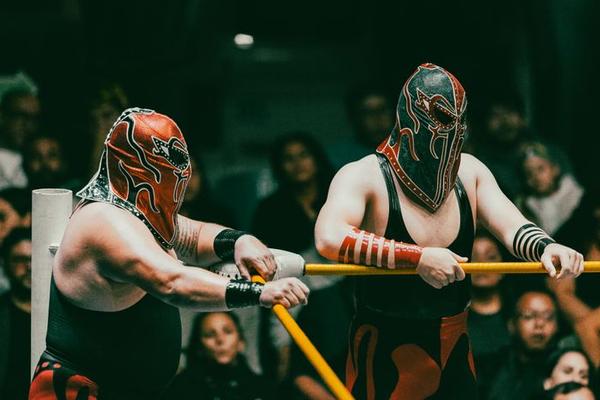
A move that scores in one wrestling competition might be illegal in another. A double-leg takedown belongs in freestyle, for example, but not Greco-Roman. In American folkstyle, keeping an opponent down after a takedown can matter as much as the attack itself. Those differences explain why wrestling matches can look so different.
All major types of wrestling involve balance, control and attempts to defeat an opponent. The rules determine which holds are permitted, when points are awarded and what happens after a takedown.
Freestyle wrestling: Leg attacks and back exposure
Freestyle wrestling is an Olympic style in which athletes can attack the legs, use trips and execute upper-body throws. Single-leg and double-leg takedowns are familiar techniques, but body locks and counters are equally important.
Wrestlers score through takedowns, exposing an opponent’s back toward the mat, certain throws and forcing an opponent out of bounds. Exposure can earn points without a lengthy hold. This differs from American folkstyle, where near-fall scoring requires a measured period in a pinning position.
A pin ends the bout. At senior international level, a ten-point lead also produces victory by technical superiority once the scoring action is finished. When ground action stalls, the referee generally returns wrestlers to standing, encouraging new attacks and rapid transitions.
Notice the sequence after a successful single-leg: a takedown may lead immediately to another scoring turn. Understanding wrestling takedown techniques helps make these exchanges easier to recognise.
Greco-Roman wrestling: Upper-body holds and throws
Greco-Roman wrestling is another Olympic discipline, but deliberate attacks below the waist and active use of the legs to complete holds are prohibited. Wrestlers still move their legs for stance and balance; the restriction concerns how they attack and defend.
Without single-leg attacks or trips, competitors fight for underhooks, arm control, body locks and throwing positions. Hand fighting is often the key to creating an opening. The eventual throw may look explosive, but the work that sets it up is usually more subtle.
Greco-Roman awards points for takedowns, back exposure and throws. Ground wrestling, called par terre, can produce turns and lifts. Passivity procedures may also lead to an ordered par-terre position. A pin wins immediately, while an eight-point margin can end a senior bout by technical superiority.
Folkstyle wrestling: The battle for control
Folkstyle, also called scholastic or collegiate wrestling, is the standard school and college format in the United States. Leg attacks are legal, as in freestyle. The major difference is how much the scoring system rewards sustained control.
Wrestlers earn points through takedowns, reversals, escapes and near falls. Under current NCAA and U.S. high-school rules, takedowns are worth three points. Specific near-fall counts, period lengths and related rules depend on the competition. College matches can also include a riding-time point.
The wrestler on top tries to keep control and create a pinning opportunity. The opponent underneath works to escape or reverse position. Matches can restart with athletes in top, bottom or neutral positions, adding a tactical dimension that differs from international freestyle.
A close folkstyle match may turn on a late escape rather than a large throw. Learning folkstyle wrestling scoring is useful before watching an American college meet.
Other wrestling formats to know
Women’s freestyle wrestling
Olympic women’s wrestling follows freestyle principles: athletes can attack legs, take opponents down and score for exposing their backs. Some specific rule restrictions differ from men’s freestyle, so the rulebooks are not identical in every detail.
Beach wrestling
Beach wrestling takes place in sand rather than on a mat. Scoring is simpler, involving actions such as takedowns and moving an opponent out of the circle. Its standing-focused contest places extra emphasis on balance and boundary awareness.
Traditional wrestling and submission grappling
Turkish oil wrestling, Mongolian wrestling and belt-wrestling traditions have their own grips, clothing and winning conditions. Japanese sumo centres on forcing an opponent out of the ring or making them touch the ground with something other than their soles.
Catch wrestling and submission grappling can involve submission holds. That distinguishes them from Olympic freestyle, Greco-Roman and folkstyle, where submissions are not a way to win. These formats are related, but their rules are not interchangeable.
What changes between the three main styles?
Freestyle permits leg attacks and rewards takedowns, throws and quick exposure. Greco-Roman restricts athletes to legal upper-body holds, making ties and throws central. Folkstyle allows leg attacks but places greater emphasis on maintaining control, escaping and reversing from underneath.
Senior international freestyle and Greco-Roman bouts normally have two three-minute periods. American school and college periods follow separate rules. A pin can end a match in all three. Technical-win margins differ too: ten points in freestyle, eight in Greco-Roman and fifteen for a standard U.S. folkstyle technical fall.
One double-leg takedown, three outcomes
Imagine a wrestler attacks both legs and takes the opponent to the mat. In freestyle, the move is legal and scores if the takedown criteria are met. A subsequent back exposure may add points. If the ground exchange stops producing action, a standing restart may follow.
In Greco-Roman, the double-leg is illegal because it attacks below the waist. The wrestler needs an upper-body route to score. In folkstyle, the attack is legal, but the referee looks for established control. The defender may then earn an escape or reversal.
Try watching one match in each style and studying the five seconds after the first takedown. What earns points? What happens next? A guide to wrestling referee signals will help translate what you see.
Frequently asked questions
What is the difference between freestyle and Greco-Roman wrestling?
Freestyle allows leg attacks and trips. Greco-Roman bans deliberate attacks below the waist and active use of the legs to execute holds. Both permit legal upper-body throws and pins.
Is folkstyle wrestling an Olympic sport?
No. Olympic wrestling comprises men’s freestyle, women’s freestyle and men’s Greco-Roman. Folkstyle is most closely associated with school and college competition in the United States.
Can a wrestling match be won without a pin?
Yes. Wrestlers can win on points when time expires or reach a technical-superiority threshold. Disqualification and other outcomes are also possible under the applicable competition rules.
Are submission holds legal in Olympic wrestling?
No. Olympic wrestling rewards takedowns, throws, back exposure and pins, not submissions. Submission holds belong to other grappling formats, and dangerous techniques are restricted.
Final thoughts
Wrestling styles explained simply come down to legal attacks, scoring and ground control. Freestyle encourages attacks throughout the body, Greco-Roman concentrates the fight on upper-body positions, and folkstyle rewards sustained control. Recognise those distinctions and the tactics become far easier to appreciate.