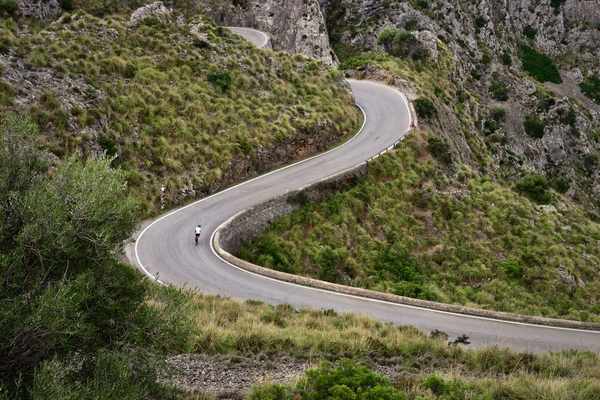
The hardest part of a British hill is often how it changes: a gentle approach, a sudden steep ramp, then another rise just when you expect the summit. Learning how to climb hills on a road bike is less about attacking every slope and more about keeping enough energy, traction and momentum to finish comfortably.
Good climbing starts before the road points upwards. The right gear, a realistic pace and a relaxed upper body can make the same hill feel different, even without a change in fitness.
Look Ahead Before the Gradient Bites
Scan for changes in steepness, bends, junctions and surface conditions. If the hill disappears around a corner, avoid assuming the visible section is the hardest. A shaded, damp lane may demand smoother pedalling than a dry road.
Carry sensible momentum from the approach when safe, but do not sprint into the base. On a longer climb, that burst usually costs more energy than it saves. Keep your line predictable and watch for traffic, especially on narrow UK lanes.
Choose an Easier Gear Early
One of the most useful cycling uphill tips is to change down before you are fighting the pedals. As resistance increases, shift into an easier rear sprocket while briefly easing pedal pressure. Make larger changes, such as moving to the small front chainring, before the steepest section.
A lower gear lets you turn the pedals smoothly instead of forcing each stroke. Many cyclists find a cadence around 75–90 revolutions per minute comfortable on manageable gradients, although steep hills and individual preferences change that. Do not chase a number at the expense of control.
Check Whether Your Gearing Suits Your Hills
If every local climb ends with painfully slow pedalling in your easiest gear, technique may not be the only issue. A compact chainset paired with a suitably wide-range cassette can help. For example, a 34-tooth front chainring with a 34-tooth rear sprocket gives a lower ratio than a 34-tooth front with a 28-tooth rear.
Any cassette or chainset change must suit your derailleur, chain capacity and drivetrain. A road bike gear ratios guide can help you understand the options before asking a bike shop to check compatibility. In climbing gears cycling, the useful question is which setup lets you pedal steadily on your actual routes.
Pace the Climb, Not the Rider Ahead
Starting too hard makes the final third miserable. Aim for an effort you could sustain for the expected duration. On a moderate climb, being able to speak a short sentence suggests you have not immediately gone all-out. A heart-rate monitor or power meter can provide another reference, but neither replaces awareness of breathing and fatigue.
Imagine a 1.5-kilometre hill with a steep final 300 metres. Rather than chasing a friend over the opening slope, settle into a controlled rhythm, use the easier middle section to recover slightly and save your hardest effort for the last ramp. That approach can feel slower initially yet produce a smoother ascent.
Make Seated Climbing Your Default
For most sustained climbs, sitting is an economical road bike climbing technique. Stay supported by the saddle, keep your hands light on the hoods or bar tops and relax your shoulders. Bend your elbows slightly, look ahead and resist hauling on the handlebars with every stroke.
As gradients increase, shift your torso modestly forwards to help keep the front wheel planted while leaving enough weight over the rear tyre for grip. Avoid exaggerated rocking or bouncing. Maintain even pedal pressure rather than stamping down in bursts.
When Standing Helps
Standing briefly can provide a change of muscle use, relieve saddle pressure and help you clear a short, steep pitch. Rise smoothly, keep the bike controlled beneath you and avoid surging so hard that your breathing spikes. Some riders prefer a slightly harder gear when standing, but comfort and gradient should decide.
On wet tarmac, loose gravel or leaf-covered lanes, standing can reduce rear-wheel traction. Stay seated where possible and apply power gently. If the rear tyre slips, avoid a sudden forceful pedal stroke.
Keep Breathing and Body Tension Under Control
When climbing gets difficult, riders often tense their jaw, grip the bars tightly and take shallow breaths. Ease your shoulders down, loosen your hands and breathe steadily. There is no magic breathing count; the goal is to avoid unnecessary tension.
Break long hills into landmarks: a gate, tree or bend. Ride to the next one while keeping the same rhythm, then reassess. This turns an intimidating climb into manageable sections without encouraging reckless bursts of speed.
Practise on a Repeatable Local Hill
Choose a quiet climb you can ride safely in a few minutes. After an easy warm-up, ascend at a controlled effort, descend carefully and recover before repeating two or three times. Record how early you shifted, where breathing became strained and whether you stayed seated. Increase repetitions gradually as fitness allows.
Try riding the same hill on different days, first with an overenthusiastic start and later with restrained pacing. Compare the final section rather than judging success only by elapsed time. A cycling hill training plan can build on these sessions, provided recovery days remain part of your week.
Maintain the bike too: properly inflated tyres, freely spinning wheels and a clean drivetrain reduce avoidable resistance. Eat and drink for the length of the whole ride, not merely the hill. For longer outings, a road cycling nutrition guide can help with fuelling before fatigue develops.
Common Questions About Road Bike Climbing
Is it better to sit or stand when cycling uphill?
Sitting is usually more sustainable for long climbs. Standing helps on short steep sections or for a change of position, but often raises effort and can reduce grip on slippery roads.
What gear should I use to climb a steep hill?
Use the easiest gear that lets you pedal smoothly while maintaining balance and control. Shift early rather than waiting until the pedals become almost impossible to turn. There is no ideal ratio for every rider or gradient.
Why do I run out of breath so quickly on hills?
You may be starting too hard, pushing an unnecessarily heavy gear or lacking practice at that intensity. Ease off at the bottom and build gradually. Unusual or disproportionate breathlessness warrants medical advice rather than simply harder training.
How can I climb hills faster without exhausting myself?
Improve pacing first, then develop aerobic fitness through consistent riding and suitable hill repetitions. Smooth gear changes and a stable position help you use the fitness you already have.
Climb with More Control, Not Just More Force
Efficient hill climbing cycling comes down to small decisions made at the right moment: reading the slope, changing gear before speed collapses, holding a sustainable pace and moving between seated and standing positions deliberately. Practise those choices on familiar climbs and even steep, uneven UK roads become less of a battle and more of a skill you can improve.