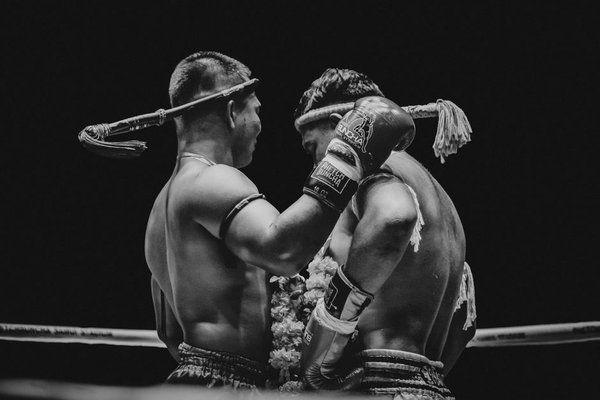
Watch two stand-up fights side by side and they may look almost identical: gloves, roundhouse kicks, sharp punches and constant movement. Yet a fighter who thrives under one ruleset can struggle under the other. The difference between Muay Thai and kickboxing is not simply where the sports originated. It is what happens when the distance closes, which strikes remain legal and what judges reward.
For a useful Muay Thai vs kickboxing comparison, think of the rules as instructions that shape the entire fight. Both demand timing, conditioning and defensive awareness, but they encourage different answers to the same attack.
The Main Differences at a Glance
Muay Thai is often called the art of eight limbs because fighters use punches, kicks, knees and elbows. Many kickboxing formats allow punches and kicks but prohibit elbows. Some, including K-1-style competitions, also permit knees under specific restrictions. That makes the precise kickboxing rules especially important.
Muay Thai allows more developed clinch exchanges and certain off-balancing techniques. Kickboxing generally favours shorter engagements at close range, with referees separating fighters when holding exceeds the permitted limit. The result is a different rhythm even when both athletes rely on the same low kick or boxing combination.
Legal Strikes: More Than Punches and Kicks
Punches and kicks
Both sports use jabs, crosses, hooks, uppercuts and a broad range of kicks. Low kicks are common in Muay Thai and many kickboxing competitions, but not every kickboxing division permits them. Traditional full-contact kickboxing, for example, differs from low-kick and K-1 disciplines.
The mechanics overlap substantially. A roundhouse kick may land with the shin, and a fighter can mix body punches with kicks to change levels. However, Muay Thai competitors often remain prepared to catch kicks or enter the clinch, while kickboxers may build longer punching combinations around the expectations of their ruleset.
Elbows and knees
Elbows are a defining Muay Thai weapon. They are useful at close range, where a full punch or kick may be awkward. Standard kickboxing competition excludes elbow strikes, so a Muay Thai fighter switching sports must remove a familiar option from their attacks and counters.
Knees require a more careful distinction. They are fundamental to Muay Thai, including attacks from an established clinch. K-1-style kickboxing can allow knee strikes, although clinch restrictions depend on the organisation. Other kickboxing formats prohibit knees altogether. Saying that kickboxing never permits knees would be misleading.
Sweeps, catches and throws
Under many Muay Thai rules, fighters can catch a kick and use permitted actions to disrupt an opponent’s balance. But Muay Thai is not wrestling: trips and throws have technical limitations, and prohibited grappling manoeuvres remain fouls. Kickboxing organisations apply their own restrictions to catching legs, sweeping and holding. Always check the event’s current rulebook.
Why the Clinch Changes Everything
The clinch is perhaps the clearest of the Muay Thai kickboxing differences. In Muay Thai, close-range hand and arm control can become an active phase of the contest. Fighters fight for posture, turn opponents, create space for knees and defend against elbows. Successful clinching takes balance and positional skill, not merely strength.
In kickboxing, prolonged neck control or body holding is usually restricted. Depending on the rules, a brief knee attack may be permitted, or holding may prompt an immediate break. A kickboxer who covers tightly and waits for separation might find that position dangerous in Muay Thai, where an opponent can continue working from the clinch.
Imagine a fighter stepping forward behind a hook. In kickboxing, the exchange might continue with another punch or low kick before both athletes reset. In Muay Thai, the defender may close the gap, establish head-and-arm control and answer with knees. The opening punch is similar; the legal follow-up is not.
Stance, Movement and Ring Style
Muay Thai fighters often adopt a relatively upright stance that makes checking kicks and lifting the lead leg convenient. They may show a measured pace, with emphasis on balance, controlled pressure and returning to position after striking. These are tendencies, not compulsory features.
Kickboxing styles frequently showcase angled entries, longer boxing combinations and quick exits. But the styles overlap: aggressive Thai boxers use sophisticated punches, and accomplished kickboxers use powerful kicks and tight defence. A sport’s rulebook influences habits without dictating a single stance.
How Are Fights Scored?
Scoring is not universal across either sport. Under International Federation of Muaythai Associations guidance, clean legal Muay Thai skills that land on a valid target count, while blocked or ineffective attacks do not. Officials apply additional criteria when scoring is otherwise close. Professional Thai stadium traditions may place particular emphasis on effective kicks, knees, balance and visible control.
Kickboxing judges likewise assess effective legal strikes, but priorities vary among WAKO disciplines and professional promotions. Some systems emphasise clean impact, damage, knockdowns and aggression through a ten-point-must framework. A busy flurry of punches is not automatically superior to fewer decisive strikes.
Gloves, Rounds and Competition Formats
Equipment is another reason to identify the promotion. Many traditional professional Muay Thai and kickboxing events use boxing gloves, but some Muay Thai promotions stage fights in small mixed-martial-arts-style gloves. Amateur competitions may require head protection and shin guards under their governing body’s rules.
Round numbers and duration vary. Traditional professional Muay Thai contests may have five rounds, while many modern promotional contests use three. Kickboxing events likewise set their own durations and protective requirements. Neither sport has one worldwide format covering every competition.
Which Should You Train?
Choose based on the training you want, not claims that one sport is universally tougher. If elbows, clinch control and close-range striking interest you, Muay Thai may suit you. If you prefer combinations, movement and stand-up exchanges with less prolonged clinching, kickboxing may feel more natural.
Before joining a gym, ask which competition rules its classes teach. A K-1 kickboxing class can look different from point fighting. Similarly, a Muay Thai fitness session may not include the supervised clinch training offered in a competition programme. Try a beginner class and notice how carefully coaches manage contact and safety.
For related reading, explore boxing footwork and defence or how MMA striking rules differ.
Frequently Asked Questions
Is Muay Thai a type of kickboxing?
Broadly, both are stand-up striking sports involving kicks and punches. In sporting practice, Muay Thai and kickboxing are usually treated as distinct disciplines with different competition rules, techniques and traditions.
Are elbows legal in kickboxing?
Generally, no. Elbow strikes are allowed in many Muay Thai competitions but prohibited under standard kickboxing rules, including common K-1-style formats.
Can kickboxers use knees?
Sometimes. K-1-style rulesets often permit knee strikes with limits on holding, while other kickboxing disciplines do not. Check the governing organisation and event regulations.
Which sport has more clinching?
Muay Thai normally permits much more sustained, active clinch work. Kickboxing usually limits holding and breaks fighters apart sooner, although the exact restrictions vary.
Final Takeaway
Muay Thai vs kickboxing is best understood as a comparison of permitted choices. Muay Thai adds elbows, a richer clinch game and distinctive balance battles; kickboxing covers several striking rulesets, many built around faster separations and punching-kicking exchanges. Learn the rules behind the bout and its tactics become easier to appreciate.