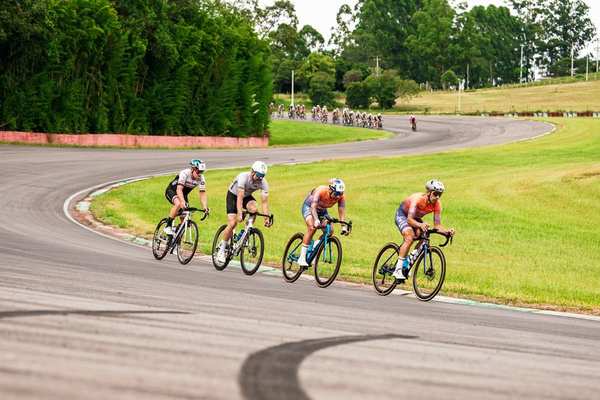
A criterium can feel manageable for the first minute and relentless by the fifth. The circuit is short, corners arrive quickly, and every small gap can become a sprint. Riders moving from steady endurance rides often discover that their fitness is fine but their position keeps putting them on the wrong side of each acceleration. The most useful criterium racing tips are about avoiding unnecessary work: find a sensible place in the bunch, preserve speed through turns and spend energy when it changes the race.
Think in Corners, Not Just Laps
Criterium cycling rewards repeated decisions. Brake too much before every bend and you must accelerate harder afterwards. Across dozens of corners, the cost grows. Somebody riding smoothly a few wheels ahead may be doing considerably less work at the same average speed.
Before the start, study the circuit. Identify the tightest turn, rough surfaces, wind direction and any road narrowing. Watch an earlier race if possible, and check whether course reconnaissance is permitted. Knowing where the bunch usually stretches is valuable preparation.
Choose a Position You Can Hold
For many newer racers, the front third of the field is a useful target, provided they can reach it without risky moves or constant surges. You can spot hazards sooner and avoid some of the stop-start effect farther back. Sitting directly on the front, however, exposes you to the wind.
Move up before the difficult section
Look for safe opportunities on broad straights when the pace settles. Gain a few places at a time. Diving into tiny gaps before a turn wastes energy and endangers other riders. Cycling bunch positioning is not about defending one wheel at any cost; it is about responding smoothly to the group’s movement.
Watch several riders ahead rather than staring at the tyre directly in front. Rising shoulders, riders sitting up or a line beginning to slow can warn you early enough to ease pressure instead of braking sharply.
Protect Your Front Wheel and Hold Your Line
Never overlap your front wheel with another rider’s rear wheel. A sideways movement could take away your steering. Leave enough room to react, and avoid assuming the rider ahead will follow a perfectly straight path.
Before changing position, check that space is clear and move gradually. Keep your shoulders relaxed and elbows slightly bent. Never chop across someone else’s front wheel or accelerate unpredictably through a crowded gap. Good crit racing strategy starts with being predictable.
Practise group skills with experienced club riders who communicate clearly. A guide to group riding etiquette is a useful foundation before a first race.
Corner Smoothly Instead of Braking Late
Bike racing cornering is not a contest to brake last. It means selecting a controlled entry speed, holding a predictable line and preserving momentum on exit. You cannot automatically use the full width of the road in a race; other riders may already occupy your preferred line.
Look through the turn
Keep your head up and look toward the exit. Do most of your braking before leaning. On turns requiring the inside pedal to remain raised, press through the outside pedal and keep your body stable. Riding in the drops can offer secure control and easy brake access if you are comfortable there.
Leave room for riders beside you. Avoid sudden direction changes and never force an inside pass without sufficient space. Painted lines, drain covers and grit require extra caution, especially when wet. A predictable corner is better than a risky attempt to gain one position.
Make the exit count
When the road straightens and grip allows, build speed progressively. Select a gear that lets you increase cadence instead of grinding. Smooth exits save energy otherwise spent chasing wheels lost through excessive braking. Practising road cycling cornering drills away from traffic helps develop that consistency.
Recognise the Accordion Effect
Imagine a six-corner circuit. The leaders roll smoothly through a bend while the back half brakes sharply. The field stretches on exit, and riders at the rear need a hard ten-second effort to reconnect. Then it happens again. This accordion effect explains why a sheltered position near the back can still be exhausting.
To reduce it, anticipate changes, keep appropriate spacing and avoid panic braking. Close small gaps steadily when possible rather than sprinting into a narrowing bunch. Some accelerations are unavoidable; repeatedly creating them through poor positioning is not.
Spend Your Matches with a Purpose
Pacing a crit does not mean holding one power number. Effort rises after corners, during attacks and in headwinds. Your goal is to recover whenever possible without drifting into a vulnerable position.
Draft on exposed straights and resist chasing every move. Before following an attack, consider who is involved, whether the course favours a breakaway and how much racing remains. An acceleration that only takes you from twentieth to eighteenth wheel may not be worth the cost.
Training should reflect repeated efforts: short, hard accelerations with incomplete recovery, scaled to your ability and combined with endurance work. Bike-handling practice remains essential. A cycling interval training guide can help structure the fitness side of preparation.
Handle the Final Laps Safely
As the finish approaches, competition for space intensifies. Improve position before the final technical section rather than making a desperate move inside a corner. Note the distance from the last bend to the finish and the wind on the finishing straight.
For a first race, finishing safely and learning the bunch’s rhythm is a worthwhile result. Never sprint through a closing gap. Hold a straight line when accelerating and follow the organiser’s rules for passing, lapped riders and finishing.
Frequently Asked Questions
Where should a beginner sit in a criterium?
Aim for a manageable position toward the front half, moving closer to the front third as confidence grows. Avoid spending long periods in the wind or fighting for a place you cannot hold safely.
How do I stop getting dropped after corners?
Look farther ahead, brake before the turn, hold a steady line and accelerate in an appropriate gear once the exit is clear. Practise on a traffic-free course before working at group-race speeds.
Is a high FTP enough for successful crit racing?
No. Aerobic power helps, but drafting, repeated accelerations, pack awareness and cornering technique determine how efficiently you use that fitness.
Should I attack early in my first crit?
Usually it is better to learn the course and bunch dynamics first. Consider attacking only when the tactical opportunity makes sense and you can do so without compromising control or safety.
Build Speed by Racing More Smoothly
The strongest-looking rider is not always working hardest. Effective criterium racing comes from controlled entries, efficient exits and enough awareness to respond when a move matters. Practise those decisions before race day, respect the riders around you and treat every event as a chance to become a calmer, more economical racer.