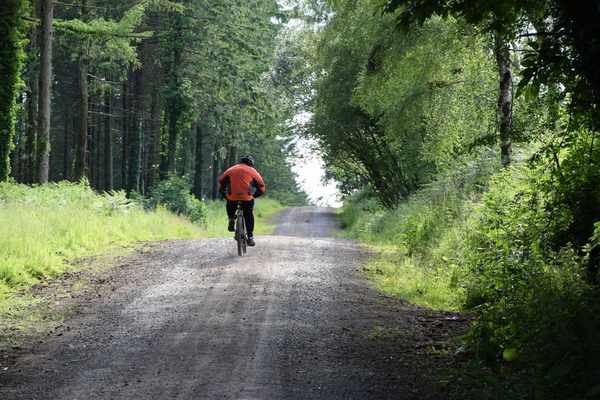
A green sign can look reassuring until the trail pitches uphill. A blue route may sound manageable until wet roots appear halfway round. Understanding mountain bike trail grading in the UK means looking beyond the colour on the map and asking what the ride actually demands.
UK trail centres use difficulty grades to indicate technical challenge, but a grade is not a promise about weather, distance or how tiring the day will feel. Read the route details before setting off.
How UK mountain bike trail grading works
Most managed mountain bike centres use a progression from green (easy) through blue (moderate), red (difficult) and black (severe). The newer system also includes double-black (extreme). Grades reflect surfaces, gradients, obstacles and the commitment needed to negotiate them, not simply the steepness of the biggest descent.
Forestry England, Natural Resources Wales and Forestry and Land Scotland publish grading guidance. Some locations are still replacing older signs, so you may see different symbols or additional categories. Treat the trailhead board and current local guidance as the final reference.
What the mountain bike trail colours mean
Green: easy
Green trails are the usual starting point for new off-road riders. Expect relatively wide, smooth tracks, gentle climbs and descents, and obstacles that are generally easy to avoid. They can still have loose stones, muddy patches, rollers and bends that need attention.
Basic steering, braking and balance are enough for most green routes. However, a long green loop with plenty of climbing can feel harder physically than a short blue skills circuit. Easy does not guarantee effortless.
Blue: moderate
Blue trails introduce more dedicated singletrack: narrow, usually one-way paths designed for flowing off-road riding. Expect moderate climbs and descents, bermed corners, roots, rocky steps and small jumps or bumps that can generally be rolled through at controlled speed.
A rider moving from green to blue should be comfortable standing on the pedals, choosing a line and controlling speed before corners. You need to read the ground rather than coast along as though on a cycle path.
Red: difficult
Red routes demand reliable mountain bike handling. Steeper climbs and descents may combine with larger rocks, roots, drop-offs, awkward cambers and rapidly changing surfaces. Some features are avoidable, but others require deliberate positioning and controlled braking.
Red is not simply blue with a longer hill. The consequence of poor line choice can be greater, and fatigue makes technical sections harder. Riders should already be confident tackling varied blue trails.
Black: severe
Black trails are intended for highly experienced riders. Expect prolonged technical difficulty, steep ground, severe obstacles and sections requiring commitment. There may be fewer ways around a feature, and maintaining control when the surface changes is essential.
Black routes should not be used to discover your skill level. Practise demanding techniques in appropriate skills areas first, then progress when you can ride comparable red features consistently.
Double-black: extreme
Under the newer UK grading guidance, double-black indicates extreme riding, potentially involving very steep or fast descents, large drops, demanding jumps and unavoidable obstacles. Exposure and the consequences of a mistake can be significant.
This is specialist terrain, not an automatic next step after one black route. Check feature descriptions, protective equipment requirements and local restrictions.
What about orange trails and forest roads?
Older trail centre grading sometimes marks bike parks and downhill areas in orange. Orange is a separate category for specialist riding, potentially involving mandatory jumps; it is not simply a rung above black. As grading changes are introduced, local signs may differ. Never infer a trail’s character from colour alone.
Forest roads also sit outside the singletrack progression. They may be broad yet have loose gravel, potholes, vehicles, unmarked junctions and steep climbs. A forest-road label does not mean a flat family cycleway.
Why two trails of the same grade feel different
UK MTB trail grades describe broad technical demands, not a precise universal difficulty score. One blue route might have smooth, flowing turns; another may feature persistent roots and tight corners. Trail builders also use optional lines and warning signs for features near the upper end of a grade.
Weather changes the picture. Rain makes roots slippery and fills ruts; dry, loose stones reduce grip differently. A route that felt comfortable in summer may require more care in winter. Check for closures and forestry diversions before visiting.
Fitness is the other half of the decision. Read distance, total climbing and estimated ride time alongside the MTB difficulty rating. A technically straightforward route with a long ascent can exhaust a beginner, while a short red descent demands substantial skill without much pedalling.
Choosing a trail that matches your skills
Start with the hardest feature you can ride calmly and repeatedly, not the toughest trail you once survived. If you struggle to look through corners or feel unsure on roots, another blue session may build more confidence than stepping onto red.
Before leaving, compare the centre’s route map with the trailhead panel. Look for escape points, optional technical sections, one-way sections and warnings about features at the top of the grade. Carry water, a suitable helmet, basic repair supplies and a charged phone; check brakes and tyres.
For useful preparation, revisit beginner mountain bike skills, mountain bike tyre pressure and how to ride berms on a mountain bike. Those focused skills often matter more than upgrading equipment.
A practical example: progressing at Afan Forest Park
Natural Resources Wales describes the Rookie trail at Afan Forest Park as a green route of around 6 km with approximately 145 m of climbing. It also lists an optional blue loop of about 2.4 km. This suggests a sensible progression: ride the green route first, assess your control on bends and descents, then consider the blue extension if you have energy to spare.
If the green loop leaves you tired, skip the extension. Completing that blue section once also does not automatically prepare you for red terrain elsewhere. Check the latest route information before travelling; layouts and access can change.
Frequently asked questions
Is a blue mountain bike trail suitable for beginners?
It can suit beginners who have practised off-road braking, cornering and balance on green trails. A first-time rider unfamiliar with loose surfaces will usually find green a better introduction.
Is red much harder than blue in UK trail centres?
Usually, yes. Red routes add steeper, more technical features and demand more consistent bike control. The step varies by centre, so read the individual route description.
Are black and double-black trails the same?
No. In the newer system, black means severe and double-black means extreme, with potentially more committing, unavoidable obstacles. Not every centre has adopted every new sign.
Do UK mountain bike grades include fitness?
Fitness informs trail guidance, but the colour alone cannot tell you how exhausted you will become. Check distance, climbing and expected duration as well as technical grade.
Ride the route, not just the colour
Use trail centre grading as a starting filter. Choose a colour that fits your proven handling skills, check climbing and current conditions, and allow yourself to skip a feature or turn back. A controlled, enjoyable ride builds the confidence needed for the next grade.